Controlled Waters and Climate Change – v2

Issue Date: February 2026
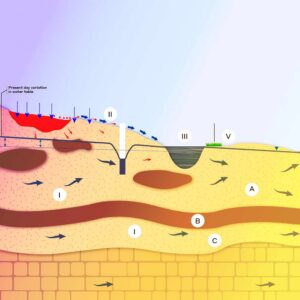
Building on our award-winning 2022 guidance, the SoBRA controlled waters and climate change subgroup has released a 2026 update to align with evolving UK policy and guidance, including NPF4, LCRM and WAT-PS-10-02/WAT-G-071.  The revised guidance will further assist land contamination professionals to make informed decisions about future climate risk to controlled waters receptors.  Key enhancements include signposting to updated climate projection databases and further exploring the influence of extreme weather events on the conceptual site model (CSM).  To support practical application, the guidance contains a series of worked examples.

Please note that the information included in this publication is correct as of 30 June 2025. Due to the evolving nature of climate research, policy and guidance, users should ensure they are consulting the most up to date scientific information available to support their controlled waters risk assessments.
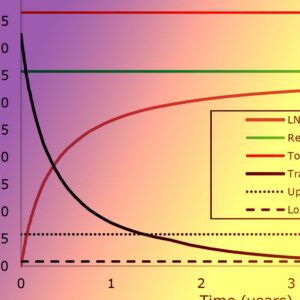
Advice Towards Understanding the Potential for LNAPL Transmissivity and Residual Saturation

Issue Date: Feb 2026

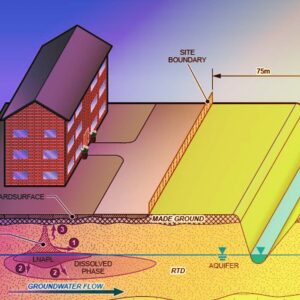
Ongoing uncertainty about why LNAPL accumulates in wells—even when transmissivity is extremely low—drives misinterpretation of LNAPL well thickness and unrealistic remediation expectations, underscoring the need for clearer understanding of why LNAPL accumulates in monitoring wells.  This document addresses that problem by explaining the principles behind transmissivity and residual saturation, and why accumulations of LNAPL do not necessarily indicate significant mass or recoverable product.  It brings together current understanding of low‑mobility behaviour, including the effects of soil heterogeneity, groundwater fluctuations and changing LNAPL properties, to help practitioners interpret field observations more accurately.  Ultimately, the document provides practical, science‑based advice to support stronger conceptual site models, better risk‑based decisions, and more robust remediation planning at LNAPL-impacted sites.

Choosing an Appropriate Sustainable Remediation Approach

Issue Date: Feb 2026

The Society of Brownfield Risk Assessment (SoBRA) is pleased to publish Choosing an Appropriate Sustainable Remediation Approach, the latest addition to our series of guidance documents on the assessment and management of light non‑aqueous phase liquids (LNAPL) in contaminated land settings. This publication provides practitioners, regulators and stakeholders with a clear, practical decision‑making framework for selecting effective, proportionate, and sustainable LNAPL remediation strategies.

Developed by a dedicated SoBRA sub‑group of experienced volunteers, the document addresses recognised knowledge gaps in the existing practice by bringing together current concepts, tools, and best practices. It sets out a transparent process for evaluating LNAPL risks, establishing remediation goals and objectives, and appraising appropriate technologies—supporting technically robust, risk‑based and regulator‑friendly decision making.

We hope this publication will assist members and the wider land contamination community in navigating the complexities of LNAPL behaviour, improving consistency across the sector, and ultimately supporting better environmental outcomes.

Ground Gas Flux

Issue Date: February 2025

Estimating gas generation and flow in the ground requires a good understanding of the sources and pathways relating to ground gas. Whilst the calculations are not necessarily mathematically complex, the primary consideration is choosing a robust and defensible approach for the assessment and representative input values in order to ensure that any such approach is appropriate for the situation and reflects the site-specific conceptual site model (CSM).

The SoBRA Ground Gas subgroup has produced the following guidance paper to aid practitioners with the estimation of mass flux of ground gas. This paper provides guidance on some approaches for calculating gas generation rates, calculating gas flux where gas monitoring data is available, determining whether gas migration is diffusion or advection dominant and providing context on determining flux significance.

Conceptualising & Characterising Contaminant Distribution in Soil Top Tips

Issue Date: November 2023

The CL:AIRE “Professional Guidance:  Comparing Soil Contamination Data with a Critical Concentration” publication (v 1.1 February 2021) emphasised the importance of developing, refining and thoroughly understanding the Conceptual Site Model (CSM) prior to considering whether statistical analysis would be applicable for a soil contaminant data set.

In response to this publication, SoBRA set up a sub-group in 2022 with the intention of providing technical guidance to support risk assessment practitioners to understand the soil contaminant element of the CSM prior to carrying out any generic or detailed quantitative risk assessment (and any associated statistical analysis).  The guidance provides a series of tips on the key data sources that should be considered and the questions that should be answered by risk assessment practitioners, to ensure that the soil contaminant distribution is correctly interpreted, not only in the context of its chemical properties and the environmental setting, but also how the distribution and CSM may change over time through human and environmental influences.

LNAPL Mobility Screening Tool

Issue Date: July 2023

The aim of this tool and accompanying document is to provide guidance on interpreting how mobile LNAPL plumes are; as part of a lines of evidence approach to characterising LNAPL plume behaviour.

The tool provides commentary and an easily accessible set of spreadsheets containing the equations provided in the CL:AIRE 2014 publication An Illustrated Handbook of LNAPL Transport and Fate in the Subsurface. 
The included equations estimate:

  • the depth of LNAPL penetration below the water table;
  • the critical thickness of LNAPL in a borehole which will indicate lateral migration;
  • Darcy flux;
  • LNAPL hydraulic conductivity; and,
  • lateral LNAPL velocity.

The document discusses which parameters the mobility equations are most sensitive to,  sources of uncertainty; and provides guidance on where to obtain suitable values for use in the equations. In addition, for selected LNAPL and sediment types, we provide example input data and graphical output to estimate the depth of LNAPL penetration below the water table; and the critical thickness of LNAPL in a borehole.

28 July 2023: Version 1.1 of this document has been published.
Corrigendum: Changes are listed on the Revisions page of the main document for Box 3, Box 5 and Appendix 2 in the main document, and Appendix 3 (capillary height spreadsheet). Capillary height calculations made using Version 1 of Appendix 3 will be correct, however, please note that capillary height calculations made using the equation in Box 5 of Version 1.0 independently of the spreadsheet tool will be incorrect by a factor of 100.

Effective Solubility Tool

Issue Date: July 2023

Calculating the effective solubility of dissolved phase contaminants is an important step in evaluating and risk assessing groundwater concentrations on sites with NAPL sources. The aim of the Effective Solubility Tool and accompanying documents is to provide a peer reviewed spreadsheet tool and guidance on how to calculate and assess dissolved phase effective solubility limits for a range of hydrocarbon contaminants where these derive from NAPL sources.
The tool has been produced based on equations published in a variety of recognised technical guidance (e.g. CL:AIRE 2014, LNAPL handbook) and features:

  • a description of the methodologies and parameters used in the calculations;
  • a NAPL molecular weight calculator;
  • an Effective Solubility calculator based on ”TPHCWG” carbon banding;
  • an Effective Solubility calculator using the “Top 20” compounds present in a mixed NAPL;
  • an example library of published fuel compositions and real composition analysis of a range of NAPL types collated from the SoBRA contributors;
  • a library of organic compounds and their physical properties used in the calculations.

The document provides guidance on when and how to use effective solubility calculation in groundwater risk assessments and provides some worked example calculations.

The Climate Emergency: Practical Considerations in Brownfield Risk Assessment

SoBRA held a one-day workshop in Birmingham in June 2022 entitled ‘The Climate Emergency: Practical Considerations in Brownfield Risk Assessment’.  Risk assessment is a fundamentally important component of a multi-disciplinary approach to successful brownfield regeneration, and therefore, the adoption and integration of climate change considerations in brownfield risk assessment is critical.  

The aim of the workshop was to discuss how we may need to adjust our approach to brownfield risk assessment to account for actual or anticipated climate change and its effects on contaminant sources, pathways and receptors.  This report presents a written record of the discussions held during the Summer 2022 workshop.