
Controlled Waters and Climate Change – v2

Issue Date: February 2026
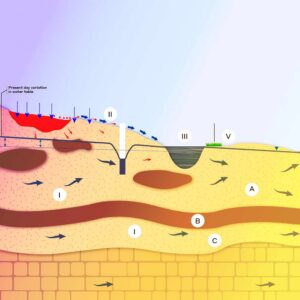
Building on our award-winning 2022 guidance, the SoBRA controlled waters and climate change subgroup has released a 2026 update to align with evolving UK policy and guidance, including NPF4, LCRM and WAT-PS-10-02/WAT-G-071.  The revised guidance will further assist land contamination professionals to make informed decisions about future climate risk to controlled waters receptors.  Key enhancements include signposting to updated climate projection databases and further exploring the influence of extreme weather events on the conceptual site model (CSM).  To support practical application, the guidance contains a series of worked examples.

Please note that the information included in this publication is correct as of 30 June 2025. Due to the evolving nature of climate research, policy and guidance, users should ensure they are consulting the most up to date scientific information available to support their controlled waters risk assessments.

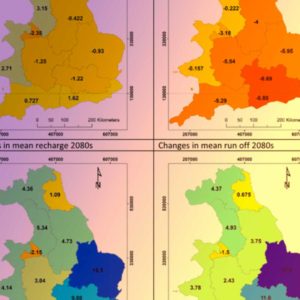
The Climate Emergency: Practical Considerations in Brownfield Risk Assessment

SoBRA held a one-day workshop in Birmingham in June 2022 entitled ‘The Climate Emergency: Practical Considerations in Brownfield Risk Assessment’.  Risk assessment is a fundamentally important component of a multi-disciplinary approach to successful brownfield regeneration, and therefore, the adoption and integration of climate change considerations in brownfield risk assessment is critical.  

The aim of the workshop was to discuss how we may need to adjust our approach to brownfield risk assessment to account for actual or anticipated climate change and its effects on contaminant sources, pathways and receptors.  This report presents a written record of the discussions held during the Summer 2022 workshop.

Controlled Waters and Climate Change

Issue Date: August 2022

In 2021, SoBRA established a controlled waters and climate change subgroup to address the need to incorporate the effects of climate change into contaminated land risk assessments.

Climate change has the potential to significantly impact the predicted risks posed by land contamination in certain scenarios and whilst Cl:AIRE published a SUBR:IM bulletin on climate change, pollution linkages and brownfield regeneration back in 2007 there has not been any further published guidance for risk assessors in the UK on how to incorporate climate change considerations into controlled waters risk assessment over and above FAQ number 8 published in the Environment Agency’s Guiding Principles for Land Contamination (GPLC) Part 2 in 2010. SoBRA’s publication by the climate change and controlled waters sub-group sets out the current regulatory and guidance context, identifies current sources of authoritative information on climate change impacts for the UK, and sets out an approach for a qualitative appraisal of climate change impact at the Preliminary Risk Assessment stage, and a series of “What If” scenarios to be considered at GQRA. The report identifies the limitations that existing standard DQRA modelling software (such as RTM and ConSim) have when looking to model the short-term, transient nature of many climate change impacts, and recommends a series of steps to mitigate this in DQRAs.